
Finding a lunch that is healthy, satisfying, easy to prepare, and practical for a busy workweek can feel almost impossible. Many office workers start the week with good intentions, only to find themselves ordering takeout or grabbing expensive convenience foods by Wednesday afternoon. Between tight schedules, deadlines, meetings, and commuting, preparing nutritious meals every day simply isn’t realistic for most people.
That’s where this Salmon Rice Bowl Recipe for Office Workers Meal Prepping Weekday Lunches comes in. It combines everything you want from a weekday meal: delicious flavor, balanced nutrition, simple preparation, and excellent meal-prep potential. Packed with tender salmon, fluffy rice, fresh vegetables, and flavorful toppings, this bowl delivers restaurant-quality taste while helping you stay organized and energized throughout your workweek.
The beauty of a salmon rice bowl lies in its versatility. Whether you’re trying to eat healthier, increase your protein intake, save money on lunches, or simply avoid the midday energy crash that often follows fast food meals, this recipe checks all the boxes. It’s colorful, customizable, and surprisingly easy to prepare in advance.
Even better, this meal doesn’t feel like “meal prep food.” Instead of eating the same bland lunch every day, you’ll enjoy a vibrant bowl filled with fresh ingredients, exciting textures, and satisfying flavors that make every lunch break something to look forward to.
Why Salmon Rice Bowls Are Perfect for Busy Professionals
Many meal-prep recipes promise convenience but sacrifice flavor. Others may taste wonderful but require hours of preparation and countless ingredients. Salmon rice bowls strike the perfect balance between simplicity and sophistication.
Salmon is naturally rich in high-quality protein and healthy omega-3 fatty acids. These nutrients help support brain function, heart health, and sustained energy levels throughout the workday. Unlike heavier lunches that can leave you feeling sluggish, salmon provides satisfying nourishment without weighing you down.
Rice serves as the ideal foundation for this bowl because it stores exceptionally well and provides lasting energy. Combined with fresh vegetables, healthy fats, and flavorful seasonings, it creates a complete meal that keeps you full and focused for hours.
Another major advantage is flexibility. You can prepare multiple servings at once, store them safely in meal-prep containers, and enjoy them throughout the week. The ingredients hold up well, and the flavors often become even better after a day in the refrigerator.
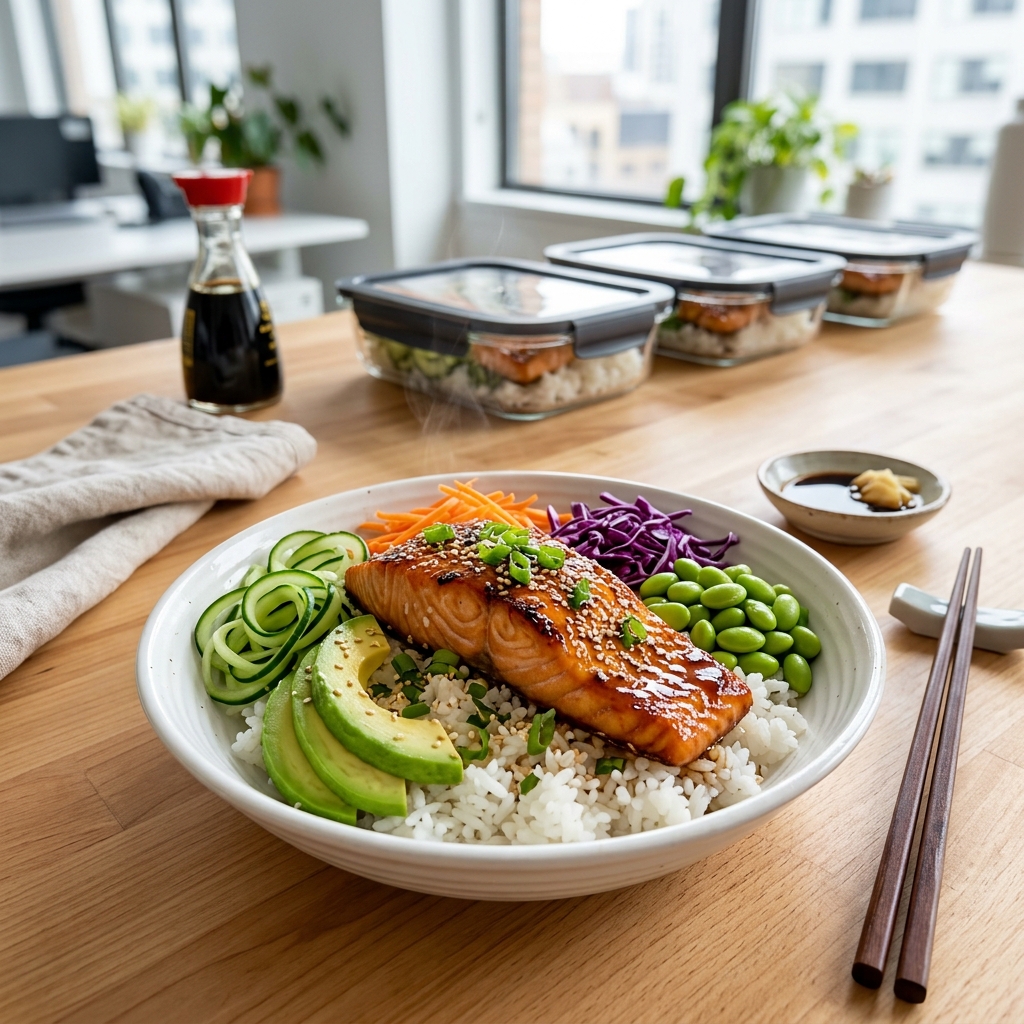
The Secret to Meal Prep Success
One of the biggest challenges office workers face is maintaining consistency with healthy eating habits. Often, the issue isn’t motivation—it’s preparation.
When healthy meals are already waiting in your refrigerator, you’re far more likely to make nutritious choices. This salmon rice bowl eliminates decision fatigue because lunch is already planned and ready to go.
The recipe also provides an excellent balance of nutrients. Protein from the salmon helps maintain muscle and keeps hunger under control. Rice provides carbohydrates for energy. Vegetables contribute fiber, vitamins, and minerals. Healthy fats from avocado and salmon create a satisfying meal that doesn’t leave you reaching for snacks an hour later.
Perhaps most importantly, this bowl feels fresh and exciting rather than repetitive. Small changes in toppings, sauces, or vegetables can completely transform the flavor profile while keeping the preparation process simple.
Ingredients
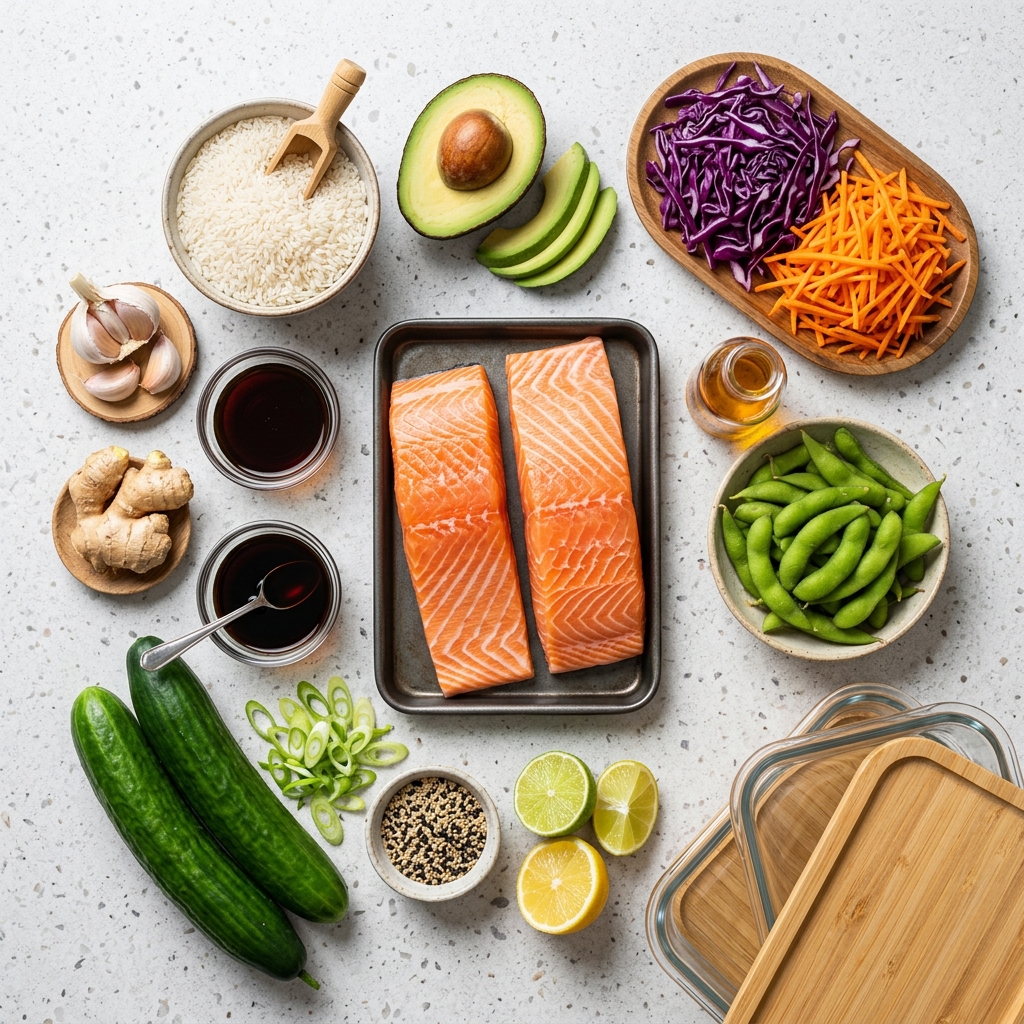
The following ingredients create approximately 4 meal-prep servings.
For the Salmon
- 4 salmon fillets (about 5–6 ounces each)
- 2 tablespoons soy sauce
- 1 tablespoon honey
- 1 tablespoon sesame oil
- 2 cloves garlic, minced
- 1 teaspoon grated fresh ginger
- 1 teaspoon lemon juice
- ½ teaspoon black pepper
For the Rice Base
- 2 cups jasmine rice
- 4 cups water
- ½ teaspoon salt
For the Fresh Vegetables
- 2 ripe avocados, sliced
- 1 large cucumber, thinly sliced
- 1 cup shredded carrots
- 1 cup shredded purple cabbage
- 1 cup shelled edamame
- 4 green onions, sliced
For Garnish
- 2 tablespoons sesame seeds
- Lemon wedges
- Extra green onions
Optional Sauce
- 3 tablespoons soy sauce
- 1 tablespoon rice vinegar
- 1 teaspoon sesame oil
- 1 teaspoon honey
- 1 teaspoon sriracha (optional)
Understanding the Ingredients
Choosing the Best Salmon
Fresh salmon is the star of this recipe, so quality matters. Look for fillets with vibrant color, firm texture, and a fresh ocean scent. Atlantic salmon offers a rich, buttery flavor, while sockeye salmon provides a deeper color and more robust taste.
Frozen salmon can also work exceptionally well. In fact, many frozen fillets are flash-frozen shortly after being caught, preserving their freshness and nutritional value.
Why Jasmine Rice Works So Well
Jasmine rice offers a light, fluffy texture and subtle aroma that complements the salmon beautifully. It reheats exceptionally well and maintains its quality throughout the week.
If desired, you can substitute brown rice for additional fiber or use sushi rice for a more authentic bowl experience.
The Importance of Fresh Vegetables
Fresh vegetables provide much more than color. They create texture contrast that keeps every bite interesting. Crunchy cucumbers, crisp cabbage, creamy avocado, and tender edamame transform a simple rice bowl into a complete dining experience.
Using a variety of vegetables also increases the nutritional value of the meal while making it visually appealing.
Step-by-Step Preparation Guide
Step 1: Prepare the Rice
Begin by rinsing the jasmine rice thoroughly under cold water until the water runs mostly clear. This removes excess starch and helps create fluffy, separate grains.
Add the rice, water, and salt to a medium saucepan. Bring the mixture to a boil over medium-high heat.
Once boiling, reduce the heat to low and cover the pot with a tight-fitting lid. Allow the rice to simmer for approximately 15 minutes.
After cooking, remove the pot from the heat and let it sit covered for another 10 minutes. This resting period allows the rice to finish steaming and improves texture.
Fluff the rice gently with a fork and set aside to cool.
Step 2: Prepare the Salmon Marinade
In a small bowl, combine the soy sauce, honey, sesame oil, minced garlic, grated ginger, lemon juice, and black pepper.
Whisk thoroughly until all ingredients are fully incorporated.
Place the salmon fillets into a shallow dish or resealable bag. Pour the marinade over the fish, ensuring each piece is evenly coated.
Allow the salmon to marinate for at least 20 minutes. If time permits, marinating for up to one hour will enhance flavor even further.
Step 3: Preheat and Prepare for Cooking
Preheat your oven to 400°F (200°C).
Line a baking sheet with parchment paper or lightly grease it to prevent sticking.
Remove the salmon from the marinade and place the fillets on the prepared baking sheet, leaving space between each piece for even cooking.
Reserve any remaining marinade if you wish to brush additional flavor onto the salmon during cooking.
Step 4: Bake the Salmon
Place the baking sheet in the preheated oven.
Bake for approximately 12 to 15 minutes, depending on the thickness of the fillets.
The salmon should become opaque and easily flake with a fork when fully cooked. Avoid overcooking, as salmon can dry out quickly.
For extra caramelization, switch the oven to broil during the final 1 to 2 minutes of cooking. This creates a beautiful glaze and enhances the flavor of the honey-soy marinade.
Remove the salmon from the oven and allow it to rest for several minutes before assembling the bowls.
Step 5: Prepare the Vegetables
While the salmon cooks, wash and prepare all vegetables.
Slice the cucumbers into thin rounds or ribbons.
Shred the carrots and purple cabbage if not already prepared.
Slice the avocados just before assembly to maintain freshness and prevent browning.
Cook the edamame according to package directions if using frozen varieties.
Arrange all vegetables in separate bowls to streamline the assembly process.
Step 6: Prepare the Optional Sauce
In a small mixing bowl, combine soy sauce, rice vinegar, sesame oil, honey, and sriracha.
Whisk until smooth and fully blended.
This simple sauce adds another layer of flavor and can be drizzled over the finished bowls just before serving.
Step 7: Assemble the Salmon Rice Bowls
Divide the cooked rice evenly among four meal-prep containers or serving bowls.
Place a portion of salmon over each rice base.
Arrange the cucumber, carrots, cabbage, edamame, and avocado around the salmon to create a colorful presentation.
Sprinkle sesame seeds and sliced green onions over the top.
If serving immediately, drizzle with the prepared sauce.
If meal prepping, store the sauce separately and add it just before eating for maximum freshness.
Step 8: Meal Prep Like a Professional
Allow all ingredients to cool completely before sealing containers.
Proper cooling helps maintain texture and food safety.
For best results, place avocado in a separate container or add fresh avocado the day you plan to eat the meal. This keeps the bowls looking vibrant and appetizing throughout the week.
A well-organized meal-prep session can provide several days of healthy lunches in less than an hour of active work, making this recipe one of the most practical options for busy office workers.
Delicious Variations of This Salmon Rice Bowl Recipe
One of the greatest strengths of a salmon rice bowl is its adaptability. Once you’ve mastered the basic recipe, you can create numerous variations to prevent lunch boredom while maintaining the convenience of meal prepping.
Spicy Salmon Rice Bowl
If you enjoy bold flavors, add a spicy kick to your salmon bowl. Mix sriracha, chili garlic sauce, or gochujang into the marinade before cooking. You can also drizzle spicy mayo over the finished bowl for an extra layer of flavor.
This variation is ideal for those who enjoy restaurant-style poke bowls and want to recreate similar flavors at home.
Teriyaki Salmon Rice Bowl
Replace the honey-soy marinade with your favorite teriyaki sauce for a sweeter, more savory flavor profile. Pair it with steamed broccoli, snap peas, and carrots for a meal that tastes like a healthy takeout favorite.
Brown Rice Power Bowl
Swap jasmine rice for brown rice to increase fiber and whole-grain nutrition. Brown rice provides a slightly nutty flavor and can help keep you full even longer throughout a busy workday.
Low-Carb Salmon Bowl
For those reducing carbohydrate intake, replace the rice with cauliflower rice. You’ll still enjoy all the delicious flavors and textures while significantly lowering the carbohydrate content of the meal.
Mediterranean Salmon Bowl
Give the recipe a Mediterranean twist by replacing the soy-based sauce with lemon vinaigrette. Add cucumbers, tomatoes, olives, red onions, and feta cheese for a completely different but equally satisfying lunch.
Sushi-Inspired Salmon Bowl
Use sushi rice, add seaweed strips, pickled ginger, cucumber, avocado, and a light drizzle of spicy mayo. This variation delivers many of the flavors people love in sushi rolls without the expense or effort of rolling sushi.
Asian-Inspired Crunch Bowl
Add crispy wonton strips, shredded cabbage, edamame, sesame dressing, and roasted cashews for a bowl packed with texture and flavor.
Expert Tips for the Best Salmon Rice Bowls
Professional chefs understand that small details often make a big difference. These expert tips can elevate your salmon rice bowl from good to exceptional.
Don’t Overcook the Salmon
The most common mistake is overcooking the fish. Salmon continues cooking slightly after being removed from the oven. Taking it out when it is just cooked through helps preserve moisture and tenderness.
A perfectly cooked salmon fillet should flake easily with a fork while remaining moist in the center.
Cool Ingredients Properly Before Storing
Many meal-prep failures happen because food is stored while still hot. Excess moisture can affect texture and freshness.
Allow rice and salmon to cool before sealing containers to maintain quality throughout the week.
Keep Wet and Dry Ingredients Separate
If possible, store sauces separately until serving time. This prevents vegetables from becoming soggy and keeps the entire meal tasting fresh.
Season Every Layer
A truly delicious rice bowl isn’t just about the salmon. Lightly seasoning the rice and vegetables ensures every component contributes flavor.
Even a small squeeze of lemon or sprinkle of salt can make a noticeable difference.
Slice Vegetables Uniformly
Consistent slicing creates a more professional presentation and ensures balanced bites. Uniform vegetables also help meal-prep containers look more appealing.
Use Fresh Herbs When Possible
Fresh herbs such as cilantro, parsley, or green onions add brightness and freshness that can transform the entire dish.
Adding herbs just before serving creates the best flavor and appearance.
Make Ahead Options
This recipe was specifically designed with meal prepping in mind, making it an excellent make-ahead option for busy office workers.
Prepare Components Separately
For maximum freshness, prepare the rice, salmon, vegetables, and sauce separately before assembling.
This method allows you to customize each bowl throughout the week and helps ingredients maintain their ideal texture.
Batch Cook on Sunday
Many meal preppers find success by dedicating one hour on Sunday to preparing lunches for the week.
Cook a large batch of rice, bake multiple salmon fillets, chop vegetables, and portion everything into containers. You’ll have healthy lunches ready to grab each morning.
Freeze Extra Salmon
Cooked salmon freezes surprisingly well. If you’re preparing a larger batch, freeze extra portions and thaw them overnight when needed.
This strategy extends your meal-prep options beyond a single week.
Prepare Sauce in Advance
The optional sauce can be mixed several days ahead and stored in a sealed container in the refrigerator.
In fact, the flavors often improve after sitting for a day or two.
What to Serve with Salmon Rice Bowls
Although this recipe is a complete meal on its own, certain side dishes can enhance the experience.
Miso Soup
A warm bowl of miso soup complements the fresh flavors of the salmon rice bowl beautifully and creates a restaurant-style meal.
Seaweed Salad
Light, refreshing, and packed with flavor, seaweed salad pairs naturally with the Asian-inspired elements of the bowl.
Fresh Fruit
Fresh pineapple, mango, watermelon, or orange slices provide a refreshing contrast and add natural sweetness to your lunch.
Steamed Vegetables
Steamed broccoli, asparagus, or green beans can increase vegetable intake while keeping the meal healthy and balanced.
Edamame
Additional seasoned edamame makes an excellent side dish and provides extra protein and fiber.
Green Tea
Many people enjoy pairing salmon bowls with unsweetened green tea, which complements the meal’s fresh and savory flavors.
How to Store Salmon Rice Bowls
Proper storage is essential for maintaining freshness, flavor, and food safety.
Refrigerator Storage
Store assembled salmon rice bowls in airtight containers in the refrigerator for up to 4 days.
For best results, keep avocado and sauces separate until serving.
Freezing Instructions
While vegetables and avocado don’t freeze particularly well, cooked salmon and rice can be frozen for up to 2 months.
Store them in freezer-safe containers and thaw overnight in the refrigerator before reheating.
Reheating Tips
Microwave the rice and salmon portion until warmed through. Add fresh vegetables, avocado, and sauce after reheating for the best texture and flavor.
Maintaining Freshness
Use high-quality airtight containers to minimize moisture loss and preserve the vibrant appearance of the ingredients.
Frequently Asked Questions
Can I use frozen salmon for this recipe?
Yes. Frozen salmon works very well and is often more economical than fresh salmon. Simply thaw it completely in the refrigerator before marinating and cooking.
How long do salmon rice bowls last in the refrigerator?
When stored properly in airtight containers, salmon rice bowls typically remain fresh for up to 4 days.
Can I make this recipe dairy-free?
Absolutely. The recipe is naturally dairy-free as written, making it suitable for many dietary preferences.
What’s the best rice for meal prepping?
Jasmine rice is an excellent option because it reheats well and maintains its texture. Brown rice and sushi rice are also great alternatives.
Can I eat the salmon cold?
Yes. Many people enjoy salmon rice bowls cold, especially during warmer months. The flavors remain delicious even without reheating.
Is this recipe good for weight management?
It can be. The combination of protein, healthy fats, vegetables, and controlled portions makes it a satisfying meal that can support balanced eating habits.
Can I substitute another fish?
Certainly. Trout, cod, tuna, or even shrimp can be used in place of salmon while following a similar preparation method.
How can I increase the protein content?
Adding extra salmon, edamame, boiled eggs, or even tofu can significantly boost the protein content of the meal.
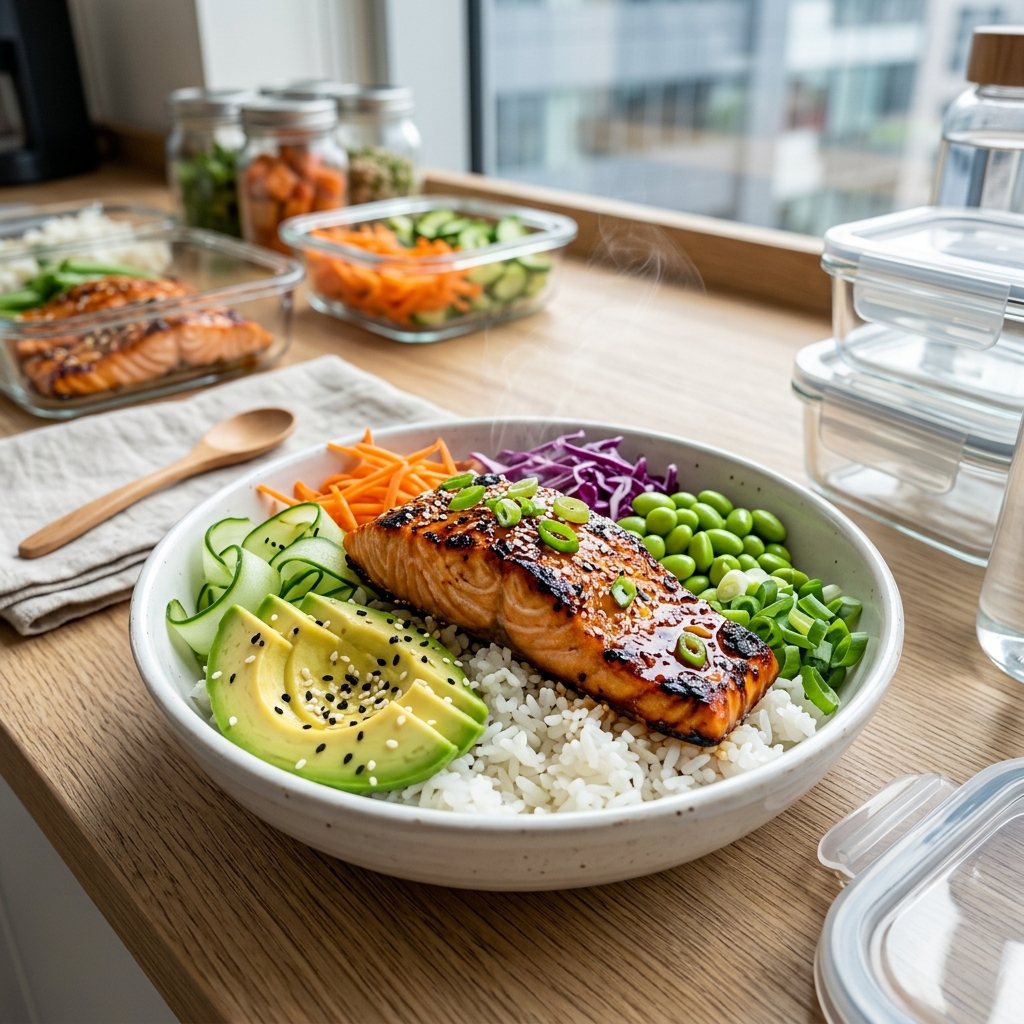
Salmon Rice Bowl Recipe for Office Workers Meal Prepping Weekday Lunches
Ingredients
Equipment
Method
- Rinse jasmine rice thoroughly under cold water.
- Add rice, water, and salt to a saucepan.
- Bring to a boil over medium-high heat.
- Reduce heat to low, cover, and cook for 15 minutes.
- Remove from heat and let sit covered for 10 minutes.
- Fluff with a fork and allow to cool.
- In a bowl, whisk together soy sauce, honey, sesame oil, garlic, ginger, lemon juice, and black pepper.
- Place salmon fillets in a shallow dish.
- Pour marinade over salmon and coat evenly.
- Marinate for 20–30 minutes.
- Preheat oven to 400°F (200°C).
- Line a baking sheet with parchment paper.
- Arrange salmon fillets on the sheet.
- Bake for 12–15 minutes or until the salmon flakes easily with a fork.
- For extra caramelization, broil for 1–2 minutes at the end.
- Remove from oven and let rest for 5 minutes.
- Slice the cucumber.
- Shred the carrots and cabbage if necessary.
- Cook edamame according to package instructions.
- Slice avocado just before assembling.
- Combine soy sauce, rice vinegar, sesame oil, honey, and sriracha in a small bowl.
- Whisk until smooth.
- Divide rice evenly among four bowls or meal prep containers.
- Place one salmon fillet on top of each portion.
- Arrange cucumber, carrots, cabbage, edamame, and avocado around the salmon.
- Sprinkle with sesame seeds and green onions.
- Drizzle with sauce before serving or pack separately for meal prep.
Notes
Cooked salmon and rice can be refrigerated for up to 4 days.
Brown rice can be substituted for additional fiber.
Frozen salmon works perfectly if thawed completely before marinating.
Add extra vegetables such as broccoli, bell peppers, snap peas, or radishes for more variety.
Keep dressing separate until serving to maintain crisp vegetables.
This recipe can be enjoyed warm or cold, making it ideal for office lunches.
For a spicy version, increase the sriracha or add chili flakes to the marinade.
To make the bowl lower in carbohydrates, replace rice with cauliflower rice.
Fresh lemon juice added just before serving brightens all the flavors and enhances the salmon.