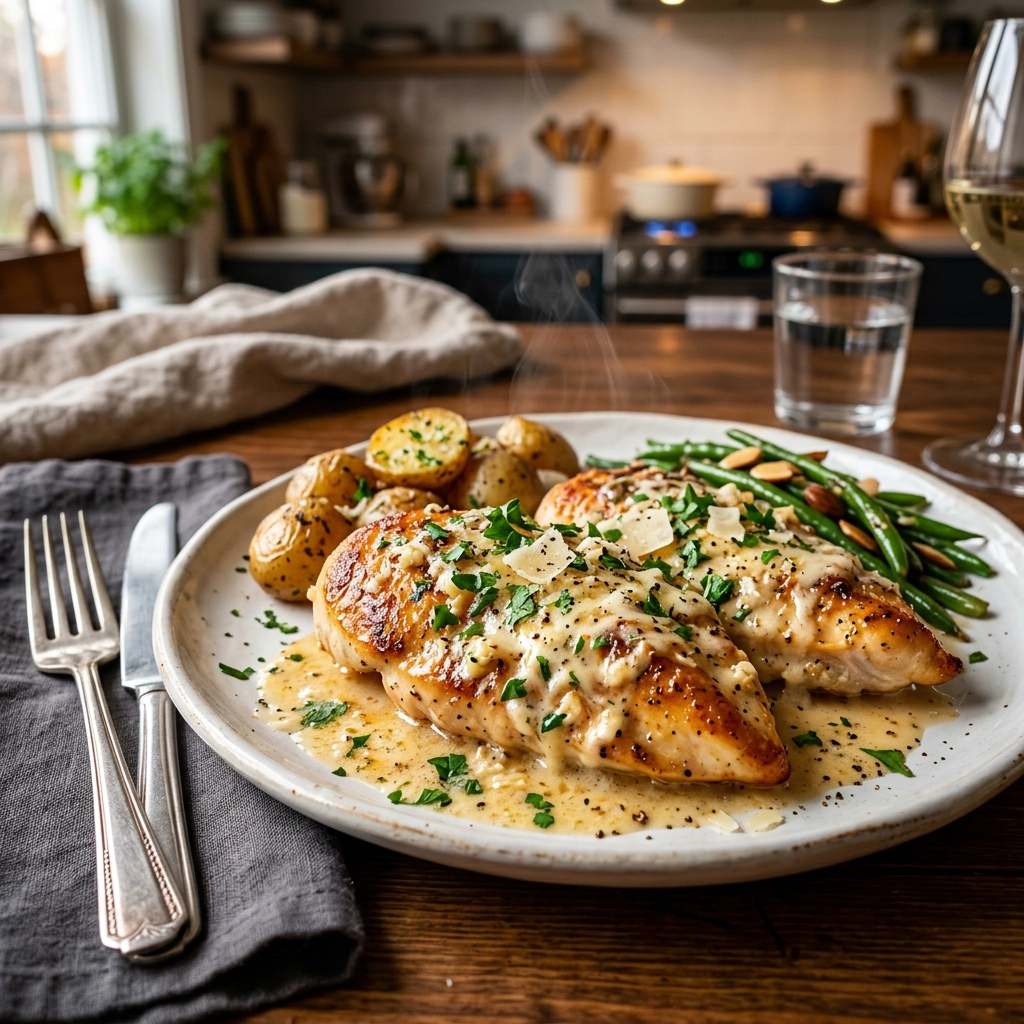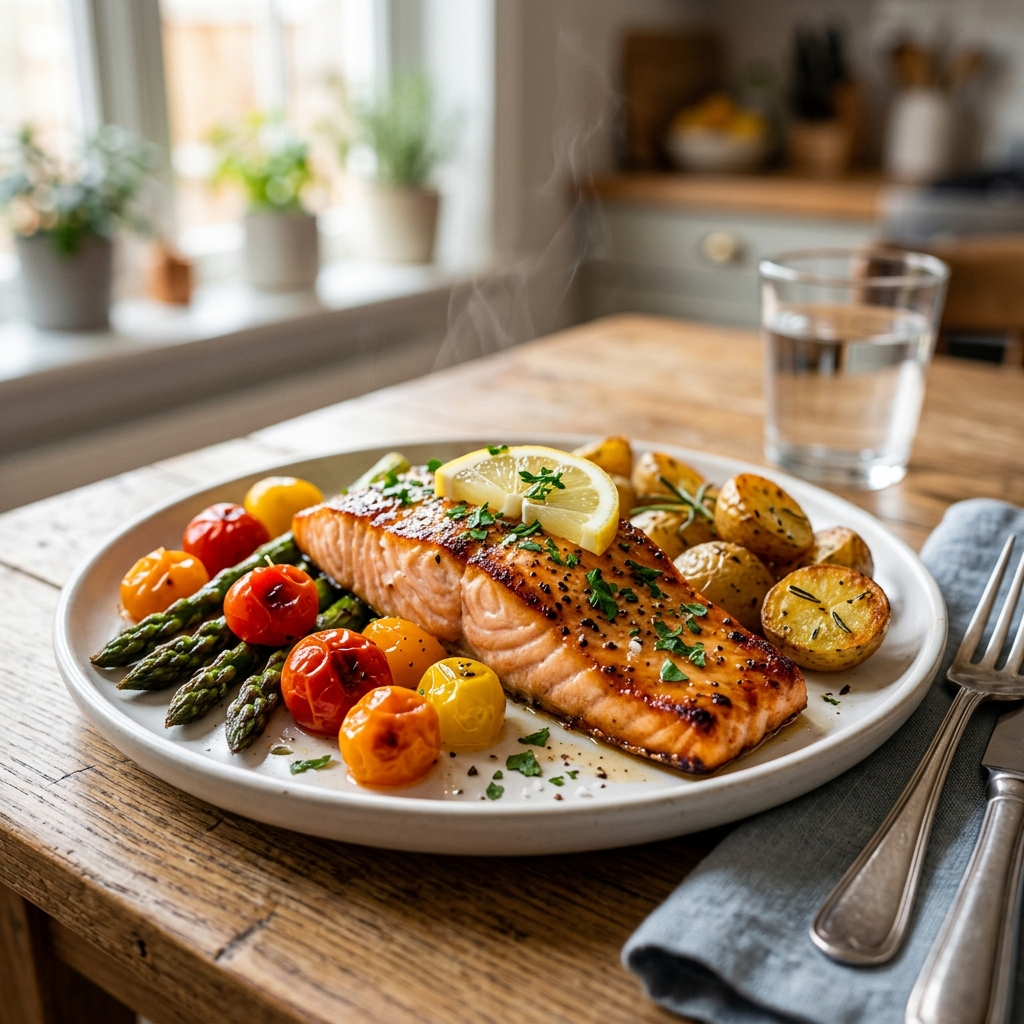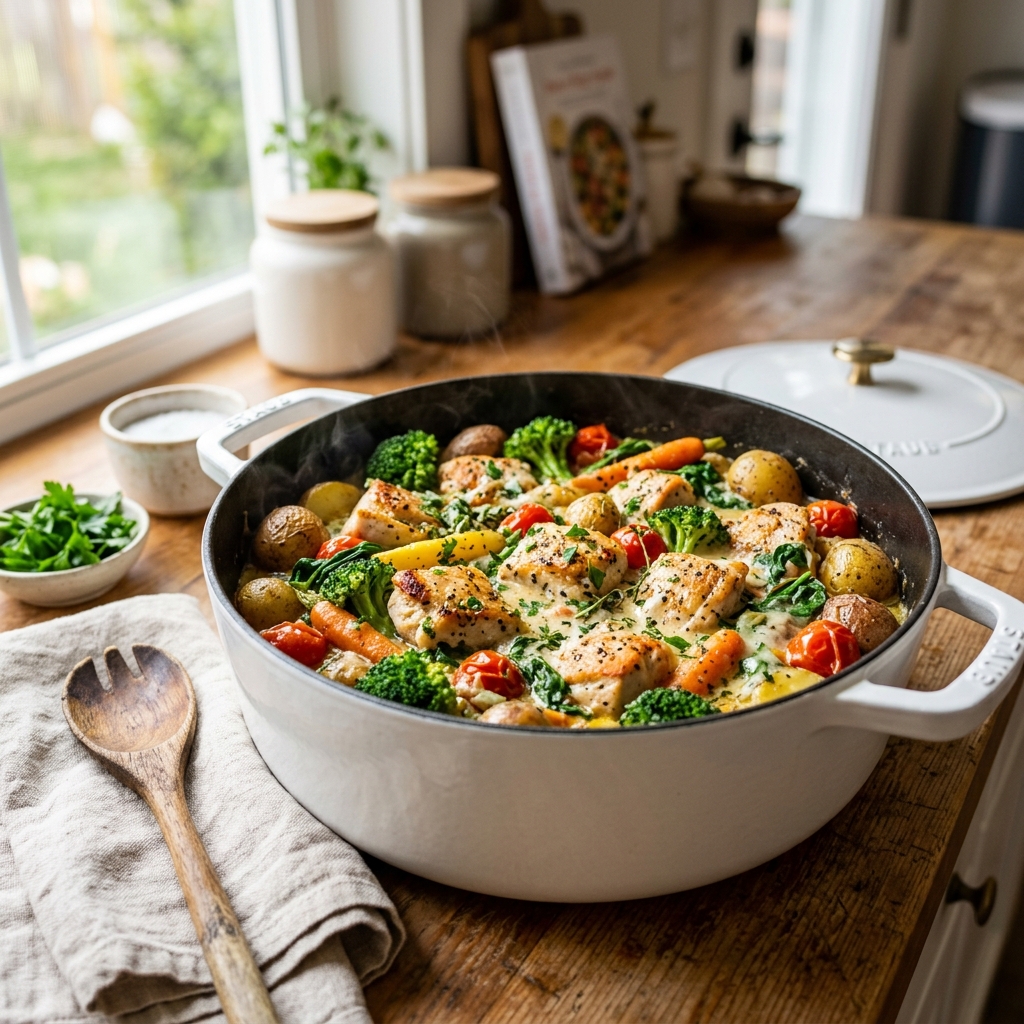

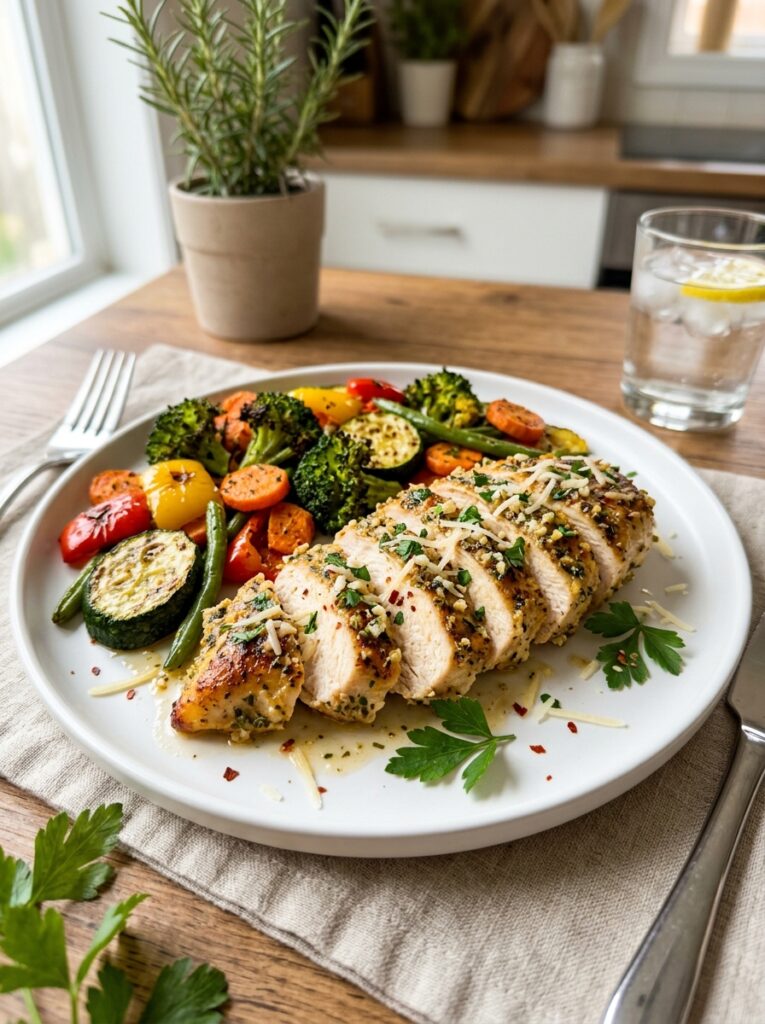
Finding a dinner recipe that is both delicious and diabetes-friendly can often feel like a challenge. Many meals either focus heavily on flavor while overlooking nutrition or prioritize health at the expense of taste. Fortunately, this Garlic Parmesan Chicken with Vegetables recipe proves that you don’t have to choose between the two. Packed with lean protein, colorful vegetables, and rich garlic-parmesan flavor, this balanced dinner delivers everything you want from a satisfying meal while supporting healthy eating goals.
Whether you’re managing diabetes, trying to maintain stable blood sugar levels, or simply looking for healthier dinner options, this recipe deserves a place in your weekly meal rotation. The combination of juicy chicken breast, nutrient-dense vegetables, and savory seasonings creates a meal that feels comforting and indulgent without relying on excessive carbohydrates or unhealthy ingredients.
One of the best things about this dish is its versatility. It works beautifully for busy weeknight dinners, meal prep sessions, family gatherings, and even special occasions when you want to serve something impressive yet wholesome. Every bite offers a wonderful balance of textures and flavors—from tender chicken and roasted vegetables to the irresistible aroma of garlic and parmesan cheese.
Why This Recipe Is Perfect for Diabetics
Managing diabetes doesn’t mean giving up flavorful foods. In fact, some of the most satisfying meals are built around wholesome ingredients that naturally support balanced blood sugar levels. This Garlic Parmesan Chicken with Vegetables recipe is a perfect example.
The foundation of this meal is lean chicken breast, which provides high-quality protein without adding unnecessary carbohydrates. Protein plays an important role in helping you feel fuller for longer and can help reduce sudden spikes in blood sugar when paired with balanced meals.
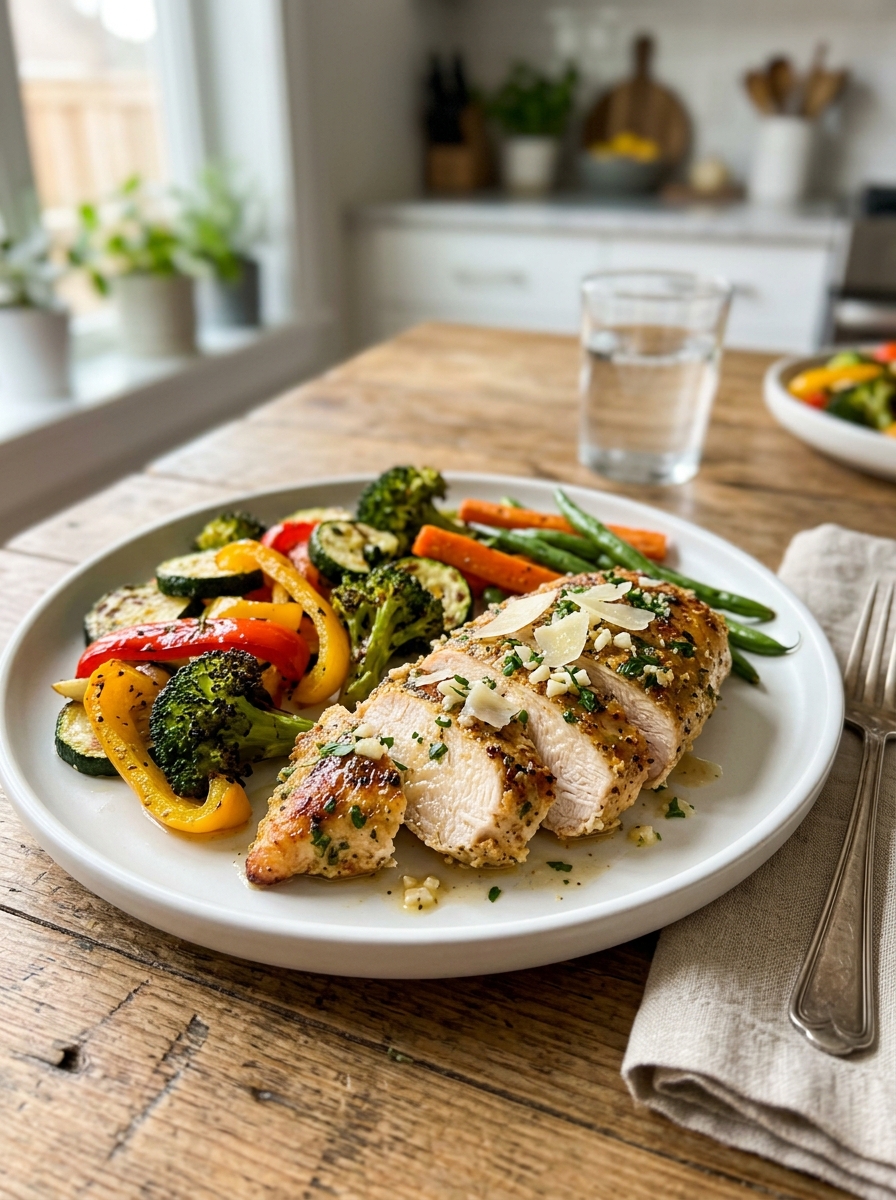
The vegetables included in this recipe are equally important. Broccoli, zucchini, green beans, bell peppers, and carrots contribute valuable vitamins, minerals, antioxidants, and dietary fiber. Fiber helps slow digestion and supports more gradual blood sugar responses after eating, making vegetables an essential component of diabetic-friendly meal planning.
Another advantage is that this recipe avoids many common ingredients that can increase blood sugar rapidly. Instead of breaded chicken, sugary sauces, or refined starches, the dish relies on fresh ingredients, herbs, garlic, parmesan cheese, and healthy fats to create exceptional flavor naturally.
What Makes This Garlic Parmesan Chicken So Special?
Many chicken recipes can feel repetitive after a few meals. However, this version stands out because it combines simple ingredients in a way that creates restaurant-quality flavor.
Fresh garlic forms the heart of the recipe. As it cooks, it develops a rich aroma that fills the kitchen and infuses every bite with savory goodness. Garlic not only enhances flavor but also allows you to reduce reliance on excessive salt without sacrificing taste.
Parmesan cheese adds another layer of complexity. Its nutty, slightly salty profile creates depth and richness while complementing both the chicken and vegetables. When melted lightly over the chicken, parmesan forms a delicious coating that elevates the entire dish.
The colorful vegetable medley provides freshness and natural sweetness that balances the savory elements perfectly. Together, these ingredients create a meal that feels complete, satisfying, and nourishing.
Ingredients
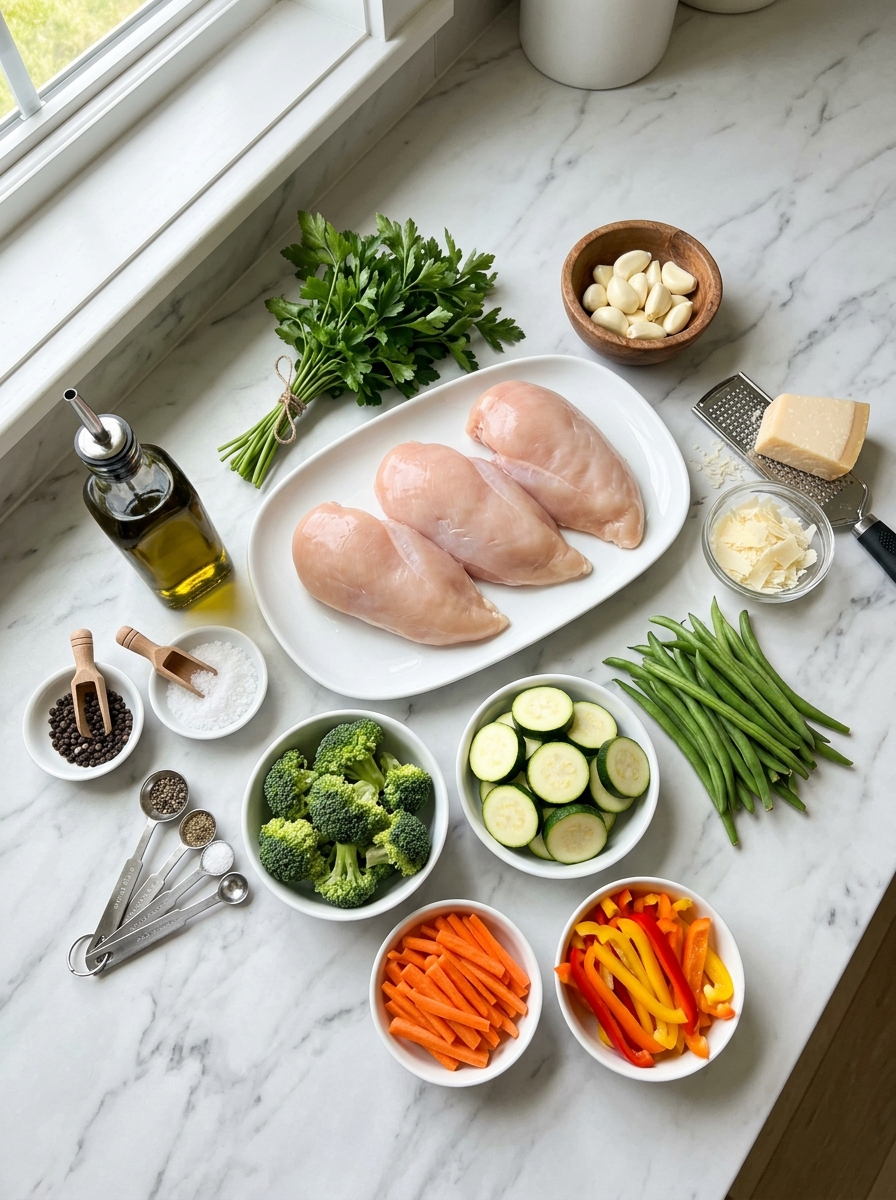
The beauty of this recipe lies in its simple ingredient list. Each ingredient serves a purpose, contributing either flavor, texture, nutrition, or all three.
For the Chicken
- 4 boneless, skinless chicken breasts
- 4 cloves garlic, minced
- 1/2 cup freshly grated parmesan cheese
- 2 tablespoons olive oil
- 1 teaspoon Italian seasoning
- 1 teaspoon paprika
- 1/2 teaspoon black pepper
- 1/2 teaspoon salt (adjust according to dietary needs)
- 1 tablespoon fresh parsley, chopped
For the Vegetables
- 2 cups broccoli florets
- 1 medium zucchini, sliced
- 1 cup green beans, trimmed
- 1 large bell pepper, sliced
- 2 medium carrots, sliced
- 1 tablespoon olive oil
- 1/2 teaspoon garlic powder
- 1/2 teaspoon black pepper
- 1/4 teaspoon salt
Optional Garnishes
- Additional parmesan cheese
- Fresh parsley
- Lemon wedges
Understanding the Ingredients
Chicken Breast
Chicken breast is one of the best protein choices for balanced dinners. It is naturally lean, versatile, and absorbs seasonings exceptionally well. Choosing skinless chicken breast helps reduce saturated fat while maximizing protein content.
Garlic
Fresh garlic provides a stronger and more authentic flavor than garlic powder alone. For the best results, mince garlic shortly before cooking to preserve its aroma and flavor compounds.
Parmesan Cheese
Freshly grated parmesan offers superior taste and texture compared to pre-packaged varieties. It melts more evenly and delivers a richer flavor profile that enhances the entire dish.
Colorful Vegetables
Using a variety of vegetables not only improves nutrition but also creates visual appeal. Different colored vegetables contain different antioxidants and phytonutrients, making the meal more beneficial overall.
Olive Oil
Extra-virgin olive oil provides healthy monounsaturated fats and helps carry flavors throughout the dish. A small amount goes a long way in promoting both taste and satisfaction.
Step-by-Step Preparation Guide
Step 1: Prepare the Chicken
Begin by patting the chicken breasts dry with paper towels. This simple step helps the seasonings adhere better and encourages proper browning during cooking.
If the chicken breasts are especially thick, consider pounding them to an even thickness. Uniform thickness helps ensure consistent cooking and prevents dry edges or undercooked centers.
Place the chicken breasts in a large bowl.
Step 2: Season the Chicken
Add olive oil, minced garlic, Italian seasoning, paprika, black pepper, and salt to the bowl.
Using clean hands or a spoon, coat the chicken thoroughly with the seasoning mixture. Make sure every surface is evenly covered for maximum flavor.
Allow the chicken to marinate for at least 15 to 30 minutes. If time allows, refrigerate for up to two hours for even deeper flavor development.
Step 3: Prepare the Vegetables
While the chicken marinates, wash and prepare all vegetables.
Cut broccoli into bite-sized florets, slice the zucchini into rounds, trim the green beans, slice the bell pepper into strips, and cut the carrots into thin rounds.
Try to keep the vegetable pieces relatively uniform in size. This promotes even cooking and creates a more attractive final presentation.
Step 4: Season the Vegetables
Place all prepared vegetables in a large mixing bowl.
Drizzle with olive oil and sprinkle with garlic powder, black pepper, and salt.
Toss thoroughly until all vegetables are evenly coated. Every piece should have a light coating of oil and seasoning.
Step 5: Cook the Chicken
Heat a large skillet over medium-high heat.
Once hot, add the chicken breasts and cook for approximately 5 to 7 minutes per side, depending on thickness.
Avoid moving the chicken excessively during cooking. Allowing it to remain undisturbed helps develop a beautiful golden-brown crust that locks in moisture and flavor.
Cook until the internal temperature reaches 165°F (74°C).
Step 6: Add the Parmesan
Once the chicken is nearly finished cooking, sprinkle the grated parmesan cheese evenly over each chicken breast.
Cover the skillet briefly and allow the cheese to melt gently. This creates a delicious parmesan topping without overcooking the chicken.
The cheese should become slightly golden while remaining soft and flavorful.
Step 7: Roast or Sauté the Vegetables
While the chicken cooks, prepare the vegetables.
For roasting, spread the vegetables in a single layer on a baking sheet and roast at 425°F (220°C) for approximately 20 to 25 minutes.
For stovetop preparation, sauté the vegetables in a large skillet for 10 to 15 minutes until tender-crisp.
Both methods work wonderfully, so choose whichever best fits your schedule and preferences.
Step 8: Combine and Serve
Arrange the roasted vegetables on serving plates and place a garlic parmesan chicken breast alongside them.
Garnish with fresh parsley and additional parmesan if desired.
Serve immediately while everything is warm and fresh for the best flavor and texture.
Recipe Variations
One of the greatest strengths of this recipe is its adaptability. Small changes can create entirely new flavor experiences while maintaining the balanced nutritional profile.
Garlic Parmesan Chicken Thighs
If you prefer darker meat, boneless skinless chicken thighs can be substituted for chicken breasts. They offer a richer flavor and remain exceptionally juicy during cooking.
Mediterranean Version
Add cherry tomatoes, olives, spinach, and a squeeze of lemon juice to create a Mediterranean-inspired variation packed with vibrant flavors.
Spicy Garlic Parmesan Chicken
For those who enjoy heat, incorporate red pepper flakes, cayenne pepper, or diced jalapeños into the seasoning blend.
Mushroom Lover’s Version
Add sliced mushrooms to the vegetable mixture for extra umami flavor and additional nutrients.
Herb Garden Variation
Experiment with fresh basil, thyme, rosemary, or oregano to create a unique herbal profile that changes with the seasons.
Expert Tips for the Best Garlic Parmesan Chicken
Even though this recipe is straightforward, a few professional cooking techniques can make a significant difference in the final result. These chef-approved tips will help you create a meal that looks and tastes exceptional every time.
Use Freshly Grated Parmesan
Pre-shredded parmesan cheese often contains anti-caking agents that can affect melting and texture. Freshly grated parmesan melts more smoothly and provides a richer, more authentic flavor.
Don’t Overcook the Chicken
One of the most common mistakes when cooking chicken breast is overcooking it. Use a meat thermometer whenever possible and remove the chicken from the heat once it reaches an internal temperature of 165°F (74°C).
Remember that the chicken will continue cooking slightly as it rests.
Allow the Chicken to Rest
After cooking, let the chicken rest for 5 minutes before slicing. This allows the juices to redistribute throughout the meat, resulting in a more tender and flavorful bite.
Cut Vegetables Evenly
Uniform vegetable sizes promote consistent cooking. Large chunks may remain undercooked while smaller pieces can become overly soft.
Roast for Maximum Flavor
Although sautéing vegetables is convenient, roasting often produces deeper flavors. The natural sugars in vegetables caramelize during roasting, creating delicious complexity without added sugar.
Season in Layers
Rather than adding all seasoning at the end, season the chicken and vegetables separately. Layering flavors throughout the cooking process produces a more balanced and satisfying dish.
Add Lemon Before Serving
A small squeeze of fresh lemon juice brightens the entire dish and enhances both the garlic and parmesan flavors without adding significant calories or carbohydrates.
Make Ahead Options
This recipe is ideal for meal prep and can easily be prepared ahead of time for busy schedules.
Prepare Ingredients in Advance
Wash and chop all vegetables up to 2 days before cooking. Store them in airtight containers in the refrigerator.
You can also season the chicken the night before and refrigerate it overnight. This allows the flavors to penetrate deeper into the meat.
Meal Prep Containers
For weekly meal prep, divide cooked chicken and vegetables into individual containers.
This creates ready-to-eat lunches or dinners that require minimal effort throughout the week.
Freeze for Later
Cooked chicken can be frozen for up to 3 months. While some vegetables may soften slightly after freezing, the overall meal remains delicious and convenient.
Allow frozen portions to thaw overnight in the refrigerator before reheating.
What to Serve with Garlic Parmesan Chicken and Vegetables
Although this meal is satisfying on its own, there are several excellent side dishes that complement its flavors while supporting balanced nutrition goals.
Cauliflower Rice
Cauliflower rice is one of the best low-carbohydrate side dishes for this recipe. It absorbs flavors beautifully and adds extra vegetables to the meal.
Mixed Green Salad
A fresh salad with leafy greens, cucumber, tomatoes, and a light vinaigrette creates a refreshing contrast to the warm chicken and vegetables.
Roasted Brussels Sprouts
Brussels sprouts pair exceptionally well with garlic and parmesan flavors, making them a natural addition to this meal.
Steamed Asparagus
Asparagus provides a simple yet elegant side dish that complements the savory profile of the chicken.
Zucchini Noodles
For those seeking a pasta-like experience without excess carbohydrates, zucchini noodles are an excellent option.
Quinoa
If your meal plan allows for moderate whole grains, quinoa can add additional fiber and plant-based protein while maintaining balanced nutrition.
Cucumber and Avocado Salad
This refreshing side dish contributes healthy fats and a cooling contrast to the savory garlic parmesan flavors.
How to Store Garlic Parmesan Chicken with Vegetables
Proper storage helps preserve both flavor and food safety.
Refrigerator Storage
Store leftovers in an airtight container in the refrigerator for up to 4 days.
Allow the food to cool completely before sealing and refrigerating.
Freezer Storage
Place cooled chicken and vegetables into freezer-safe containers or freezer bags.
Store for up to 3 months.
Label containers with the preparation date for easy tracking.
Reheating Instructions
For best results, reheat in a skillet over medium heat until warmed through.
You can also use a microwave for convenience, though the vegetables may become slightly softer.
Adding a splash of water or chicken broth during reheating can help maintain moisture.
Frequently Asked Questions
Is this recipe truly diabetic-friendly?
Yes. This recipe focuses on lean protein, fiber-rich vegetables, healthy fats, and minimal refined carbohydrates. These factors help support balanced blood sugar management when enjoyed as part of an overall healthy eating plan.
Can I use chicken thighs instead of chicken breasts?
Absolutely. Boneless skinless chicken thighs work wonderfully in this recipe and often produce an even juicier result. Simply adjust cooking times as needed.
Can I make this recipe dairy-free?
Yes. You can omit the parmesan cheese or use a dairy-free parmesan alternative. The garlic and vegetable flavors still create a delicious meal.
Which vegetables work best in this recipe?
Broccoli, zucchini, bell peppers, green beans, carrots, asparagus, Brussels sprouts, mushrooms, cauliflower, and spinach all work exceptionally well.
Can I cook everything in one pan?
Yes. A sheet pan version is very popular. Arrange seasoned chicken and vegetables on a baking sheet and roast until the chicken is fully cooked and the vegetables are tender.
Is this recipe good for weight management?
Because it is high in protein and rich in vegetables, many people find it highly satisfying. The combination can help support fullness and reduce unnecessary snacking between meals.
Can I prepare this meal for meal prep?
Definitely. This recipe stores and reheats well, making it ideal for weekly meal planning.
How can I add more flavor without adding sugar?
Fresh herbs, lemon juice, garlic, onion powder, smoked paprika, black pepper, and additional parmesan cheese can all enhance flavor without relying on added sugars.
Can children enjoy this recipe?
Yes. The flavors are family-friendly and can be adjusted to suit individual preferences. Children often enjoy the cheesy garlic coating and colorful vegetables.
What if I don’t have fresh garlic?
Garlic powder can be substituted in a pinch. However, fresh garlic provides the most robust flavor and aroma.
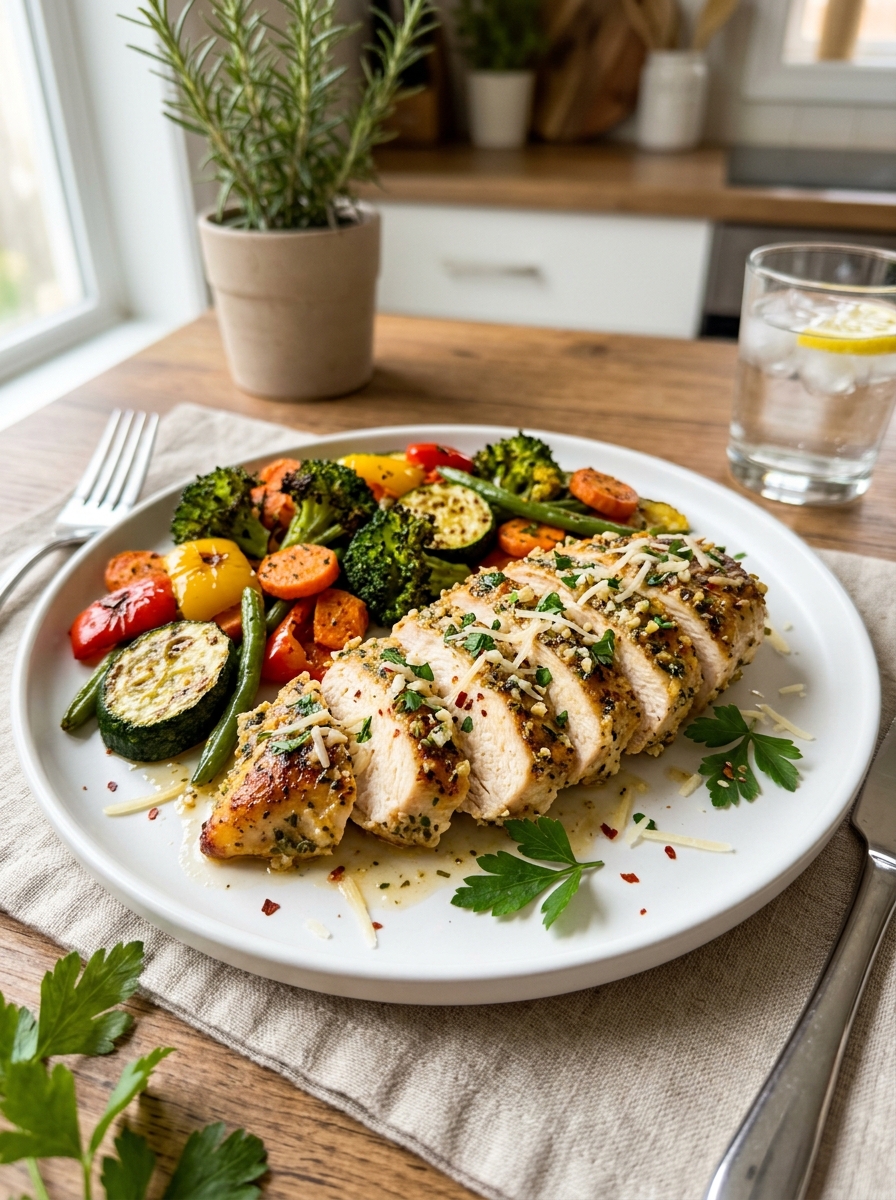
Garlic Parmesan Chicken with Vegetables for Diabetics Managing Balanced Dinners
Ingredients
Equipment
Method
- Pat the chicken breasts dry with paper towels and place them in a large mixing bowl.
- Add olive oil, minced garlic, Italian seasoning, paprika, black pepper, and salt. Mix thoroughly until the chicken is evenly coated. Allow to marinate for 15–30 minutes if time permits.
- Wash and cut the broccoli, zucchini, green beans, bell pepper, and carrots into uniform pieces.
- Place the vegetables in a large bowl. Drizzle with olive oil and season with garlic powder, black pepper, and salt. Toss until evenly coated.
- Heat a large skillet over medium-high heat. Cook the chicken breasts for 5–7 minutes per side, or until the internal temperature reaches 165°F (74°C).
- Sprinkle parmesan cheese over the chicken during the final few minutes of cooking. Cover briefly and allow the cheese to melt.
- Roast the vegetables at 425°F (220°C) for 20–25 minutes, or sauté them in a skillet for 10–15 minutes until tender-crisp.
- Arrange the vegetables on serving plates. Place a chicken breast alongside the vegetables and garnish with parsley, additional parmesan, and lemon wedges if desired.
Notes
For extra juicy chicken, allow the cooked chicken to rest for 5 minutes before serving.
Feel free to substitute vegetables based on seasonal availability.
This recipe is excellent for meal prep and can be refrigerated for up to 4 days.
For additional flavor, finish with a squeeze of fresh lemon juice before serving.
Boneless skinless chicken thighs can be substituted for chicken breasts if preferred.
To keep sodium lower, reduce the added salt and use a smaller amount of parmesan cheese.
Recipe Tips
Cut vegetables into similar-sized pieces for even cooking.
Avoid overcrowding the baking sheet when roasting vegetables.
Use a meat thermometer to ensure perfectly cooked chicken every time.
Roasting vegetables provides deeper flavor than steaming or boiling.