
When grocery prices keep climbing and every dollar matters, finding meals that are affordable, filling, and nutritious can feel like a challenge. Many families are searching for ways to stretch their grocery budgets without sacrificing flavor or nutrition. That’s where canned salmon becomes a true kitchen hero. Often overlooked in favor of more expensive fresh seafood, canned salmon offers incredible value while providing high-quality protein, healthy fats, vitamins, and minerals.
This budget canned salmon recipe is designed specifically for households looking to make the most of their grocery dollars. It transforms a simple can of salmon and a few pantry staples into a satisfying meal that tastes far more expensive than it actually is. Whether you’re feeding a large family, cooking for yourself, or simply trying to reduce your food expenses, this recipe proves that delicious meals don’t have to come with a high price tag.
One of the best things about this recipe is its versatility. It works as a quick weeknight dinner, a budget-friendly lunch, or even meal prep for the week ahead. The ingredients are easy to find, affordable, and often already sitting in your pantry. Best of all, the finished dish is hearty enough to keep everyone satisfied while helping you stay within your grocery budget.
Why This Budget Canned Salmon Recipe Works So Well
Many people assume that eating healthy means spending more money, but that’s not always true. Canned salmon is one of the most economical protein sources available. Unlike fresh salmon, which can be expensive and perishable, canned salmon is affordable, shelf-stable, and ready to use whenever you need it.
Another advantage is that canned salmon is packed with nutrients. It contains omega-3 fatty acids, which support heart and brain health. It also provides protein, vitamin D, calcium, and essential minerals that contribute to a balanced diet. For families trying to eat well on a limited budget, canned salmon offers exceptional nutritional value.
This recipe also stretches ingredients effectively. By combining salmon with breadcrumbs, eggs, onions, and seasonings, you can create multiple servings from a single can. Instead of serving salmon alone, these additions increase volume, improve texture, and make the meal more filling. This simple strategy helps maximize every grocery dollar while creating a meal that feels substantial and satisfying.
The Secret to Making Budget Meals Feel Special
One of the biggest challenges of budget cooking is avoiding meal fatigue. Eating the same inexpensive foods repeatedly can become boring. The secret is learning how to elevate simple ingredients with proper preparation and seasoning.
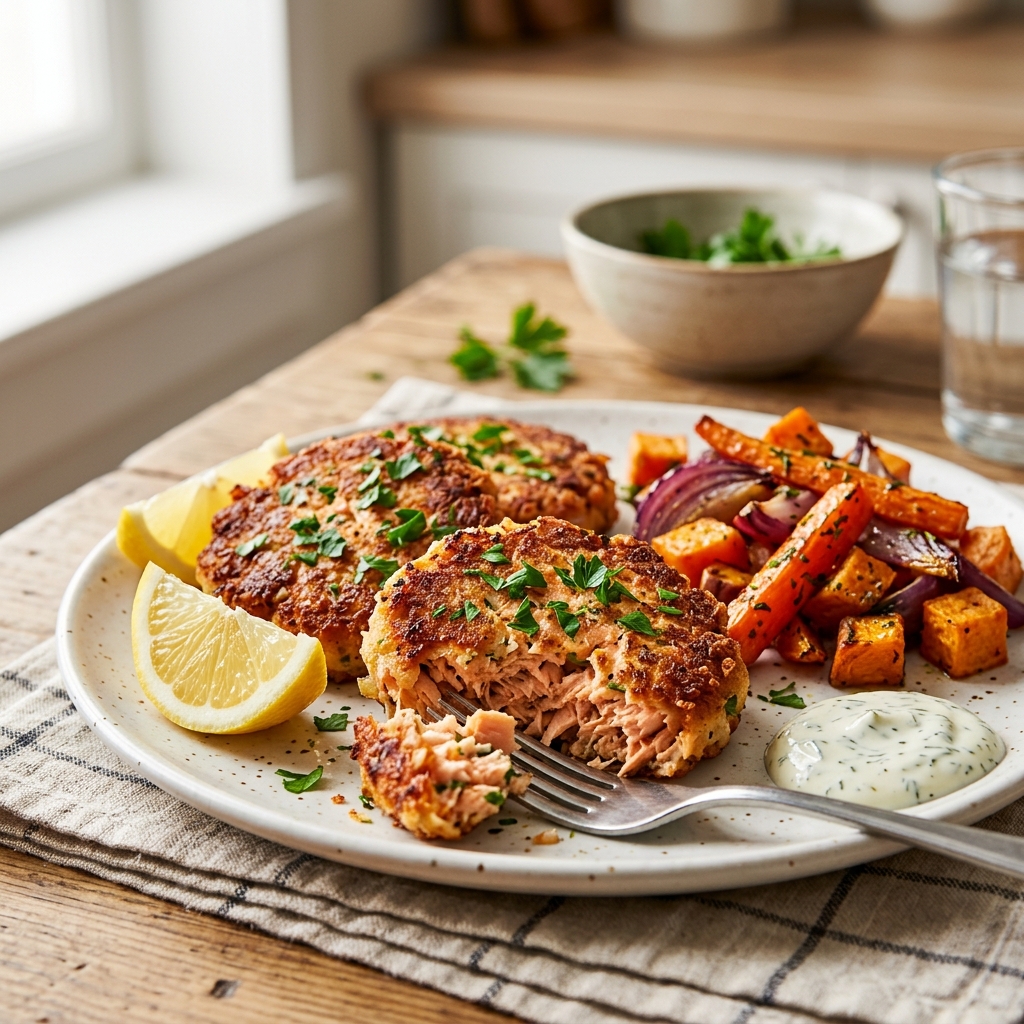
In this recipe, canned salmon is transformed into golden, crispy salmon patties that look and taste far more impressive than their humble ingredients suggest. The combination of crunchy exteriors and tender interiors creates a satisfying texture that appeals to both adults and children.
Fresh herbs, onions, garlic, and lemon add brightness and flavor without significantly increasing the cost. These inexpensive additions make the dish feel fresh and homemade rather than merely economical. The result is a comforting meal that delivers both flavor and value.
Ingredients
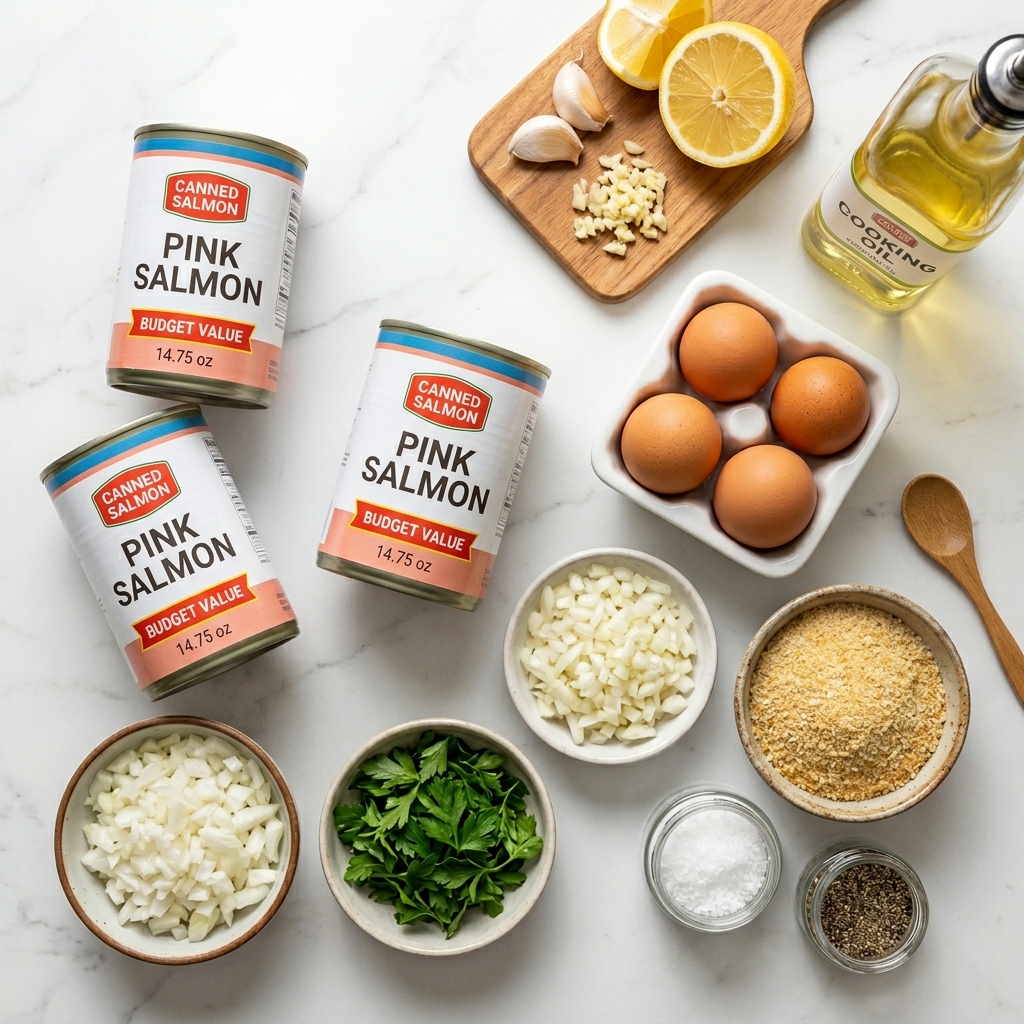
The following ingredients create approximately 4 to 6 servings, depending on portion size.
For the Salmon Patties
- 2 cans salmon (approximately 14–15 ounces total), drained
- 2 large eggs
- 1 cup breadcrumbs
- ½ medium onion, finely diced
- 2 cloves garlic, minced
- 2 tablespoons fresh parsley, chopped
- 1 tablespoon lemon juice
- ½ teaspoon salt
- ½ teaspoon black pepper
- ½ teaspoon paprika
- 2 to 3 tablespoons vegetable oil for frying
Optional Budget-Friendly Additions
- 1 grated carrot
- 1 finely chopped celery stalk
- 2 tablespoons finely diced bell pepper
- ¼ teaspoon cayenne pepper for heat
- 1 teaspoon dried herbs
Understanding the Ingredients
Canned Salmon
The star of the recipe is canned salmon. Both skinless and bone-in varieties work well. If your canned salmon contains soft bones, don’t throw them away. They are edible, rich in calcium, and become virtually unnoticeable once mixed into the patties.
Breadcrumbs
Breadcrumbs help bind the mixture together while stretching the recipe further. You can use store-bought breadcrumbs, crushed crackers, or even stale bread processed into crumbs.
Eggs
Eggs act as a binder and help keep the patties intact during cooking. They also contribute moisture and richness.
Onion and Garlic
These inexpensive flavor boosters make a significant difference. They add depth and savory character without increasing the overall cost of the meal.
Lemon Juice
A small amount of lemon juice brightens the salmon’s flavor and balances the richness of the fish.
Parsley
Fresh parsley adds color, freshness, and visual appeal. If unavailable, dried parsley can be substituted.
Step-by-Step Preparation Guide
Step 1: Prepare the Salmon
Open the canned salmon and drain any excess liquid. Transfer the salmon to a large mixing bowl.
Use a fork to break the salmon into small flakes. If the salmon contains bones and skin, you may remove them if preferred, but they are perfectly safe and nutritious to leave in.
The finer the salmon is flaked, the easier it will be to combine with the remaining ingredients.
Step 2: Add the Flavor Ingredients
To the bowl, add:
- Finely diced onion
- Minced garlic
- Chopped parsley
- Lemon juice
- Salt
- Black pepper
- Paprika
Mix thoroughly until the seasonings are evenly distributed throughout the salmon.
At this stage, the mixture should already smell fresh, savory, and appetizing.
Step 3: Incorporate the Binding Ingredients
Add the eggs and breadcrumbs to the salmon mixture.
Using a spoon or clean hands, combine everything thoroughly until a cohesive mixture forms.
The mixture should hold together when squeezed gently. If it feels too wet, add a little more breadcrumb. If it seems too dry, add a teaspoon of water or lemon juice.
Achieving the right consistency is important because it prevents the patties from falling apart during cooking.
Step 4: Form the Patties
Divide the mixture into equal portions.
Shape each portion into a round patty approximately ½ inch thick.
Try to keep the patties similar in size so they cook evenly.
Place the formed patties on a plate or baking sheet while preparing to cook them.
Step 5: Let the Patties Rest
This is a step many home cooks skip, but it can make a noticeable difference.
Allow the patties to rest for 10 to 15 minutes before cooking.
This resting period helps the breadcrumbs absorb moisture and allows the ingredients to bind together more effectively, reducing the likelihood of breakage during frying.
Step 6: Heat the Pan
Place a large skillet over medium heat.
Add the vegetable oil and allow it to heat thoroughly before adding the patties.
The oil should shimmer slightly but not smoke.
Properly heated oil helps create a beautiful golden crust while preventing sticking.
Step 7: Cook the Salmon Patties
Carefully place the patties into the skillet without overcrowding the pan.
Cook for approximately 4 to 5 minutes per side.
Avoid moving the patties too early. Allowing them to develop a crust first helps them stay intact when flipped.
Once cooked, the patties should be golden brown, crispy on the outside, and heated through in the center.
Transfer them to a plate lined with paper towels to absorb any excess oil.
How to Know When the Patties Are Perfect
Many home cooks worry about overcooking seafood, but this recipe is very forgiving because canned salmon is already cooked.
Look for these signs:
- Golden-brown exterior
- Crisp edges
- Firm texture
- Easy release from the skillet
- Even browning on both sides
When these characteristics are present, your patties are ready to serve.
Common Mistakes to Avoid
Even simple recipes can benefit from a few professional insights.
Using Too Much Liquid
Excess moisture can make the patties fall apart. Always drain the salmon thoroughly before mixing.
Skipping the Resting Time
Allowing the mixture to rest helps create stronger patties that hold together better during cooking.
Cooking Over High Heat
High heat may burn the outside before the interior is fully heated. Medium heat produces the best balance of color and texture.
Overcrowding the Pan
Too many patties in the skillet at once lowers the temperature and prevents proper browning.
Flipping Too Early
Give the patties enough time to form a crust before turning them. This helps prevent breakage and creates a more attractive finished product.
Recipe Variations
One of the greatest strengths of this budget canned salmon recipe is its flexibility. You can customize it based on what you already have in your pantry, making it even more economical and practical.
Southern-Style Salmon Patties
For a classic Southern twist, replace some of the breadcrumbs with crushed saltine crackers. Add a pinch of onion powder and garlic powder for extra flavor. Serve with rice, gravy, or collard greens for a comforting meal.
Spicy Salmon Patties
If your family enjoys a little heat, add cayenne pepper, crushed red pepper flakes, or finely diced jalapeños to the mixture. The spice balances the richness of the salmon and creates a more exciting flavor profile.
Vegetable-Loaded Salmon Patties
Stretch the recipe even further by adding grated carrots, zucchini, finely chopped cabbage, or bell peppers. Not only does this increase the volume of the meal, but it also adds nutrients and color.
Herb and Lemon Version
Increase the parsley and add fresh dill if available. Extra lemon zest can provide a brighter flavor that feels fresh and light, especially during warmer months.
Oven-Baked Version
If you prefer to use less oil, place the patties on a lightly greased baking sheet and bake at 400°F (200°C) for approximately 15 to 20 minutes, flipping halfway through cooking. This method produces a slightly lighter version while maintaining excellent flavor.
Air Fryer Version
Arrange the patties in a single layer inside an air fryer basket and cook at 375°F (190°C) for about 10 to 12 minutes, turning once during cooking. This creates a crispy exterior with minimal oil.
Expert Tips for the Best Budget Salmon Patties
Professional chefs know that simple recipes often depend on technique more than expensive ingredients. These tips will help you achieve the best possible results every time.
Drain Thoroughly
Excess moisture is one of the most common reasons salmon patties fall apart. Take a few extra minutes to drain the salmon well before mixing.
Dice Ingredients Finely
Large chunks of onion or vegetables can weaken the structure of the patties. Finely chopping ingredients ensures even distribution and better texture.
Taste the Mixture
Before forming the patties, assess whether additional seasoning may be needed. Since canned salmon brands vary in saltiness, adjustments are sometimes necessary.
Use a Measuring Cup
For evenly sized patties, use a measuring cup or scoop to portion the mixture. Uniform patties cook more evenly and look more professional.
Keep the Heat Moderate
Medium heat is ideal. Too much heat can burn the outside while leaving the inside less appealing.
Add Budget-Friendly Fillers Carefully
Ingredients such as potatoes, rice, oats, or vegetables can stretch the recipe further, but adding too much may overwhelm the salmon flavor. Balance is key.
Don’t Skip Fresh Acid
A squeeze of lemon juice before serving brightens the flavor and makes the entire dish taste fresher.
Make Ahead Options
This recipe is ideal for meal planning and make-ahead cooking.
Prepare the Mixture in Advance
The salmon mixture can be prepared up to 24 hours ahead and stored in the refrigerator. This allows flavors to develop even further.
Form Patties Ahead of Time
You can shape the patties and refrigerate them for up to one day before cooking. Keep them covered to prevent drying out.
Freeze Uncooked Patties
Place uncooked patties on a baking sheet and freeze until solid. Transfer them to a freezer-safe container or bag. They can be stored for up to three months.
When ready to cook, thaw overnight in the refrigerator or cook directly from frozen, adding a few extra minutes to the cooking time.
Freeze Cooked Patties
Cooked patties also freeze well. Allow them to cool completely before packaging and freezing.
What to Serve with Budget Canned Salmon Patties
These salmon patties pair beautifully with a wide variety of affordable side dishes.
Rice
White rice, brown rice, or seasoned rice creates a filling and budget-friendly meal.
Mashed Potatoes
Creamy mashed potatoes complement the crispy texture of the salmon patties.
Roasted Vegetables
Carrots, cabbage, sweet potatoes, and seasonal vegetables make nutritious and economical side dishes.
Coleslaw
A simple homemade coleslaw adds crunch and freshness.
Cornbread
Warm cornbread creates a comforting Southern-inspired meal.
Green Salad
A basic salad with lettuce, tomatoes, and cucumbers provides balance and color.
Steamed Vegetables
Broccoli, green beans, peas, or mixed vegetables are affordable options that add nutrients.
Pasta Salad
Cold pasta salad can turn this recipe into a complete lunch or dinner spread.
Bread Rolls
Simple dinner rolls help stretch the meal further and are perfect for larger families.
Dipping Sauces
Serve with:
- Tartar sauce
- Garlic yogurt sauce
- Lemon aioli
- Hot sauce
- Ranch dressing
- Honey mustard
How to Store Budget Canned Salmon Patties
Proper storage helps prevent waste and allows you to enjoy leftovers later.
Refrigerator Storage
Store cooked salmon patties in an airtight container in the refrigerator.
They will remain fresh for up to 3 to 4 days.
Freezer Storage
Wrap patties individually or separate layers with parchment paper before freezing.
Store in a freezer-safe container or bag for up to 3 months.
Reheating Instructions
For the best texture:
- Reheat in a skillet over medium heat.
- Warm in an air fryer for a few minutes.
- Use an oven at 350°F (175°C) until heated through.
Microwaving works in a pinch but may soften the crispy exterior.
Frequently Asked Questions
Can I use pink salmon or red salmon?
Yes. Both varieties work well. Pink salmon is generally less expensive and perfect for budget-conscious cooking, while red salmon offers a richer flavor.
Do I have to remove the bones?
No. The bones in canned salmon are soft, edible, and rich in calcium. Most people barely notice them once the mixture is combined.
Can I make this recipe without eggs?
Yes. You can substitute eggs with mashed potatoes, mayonnaise, plain yogurt, or a flaxseed mixture. The texture may vary slightly, but the patties will still hold together.
Can I use fresh salmon instead?
Absolutely. Cook and flake fresh salmon before using it in the recipe. However, canned salmon remains the more economical option.
Why are my salmon patties falling apart?
The most common causes are excess moisture, insufficient binder, or flipping too early during cooking. Make sure the mixture holds together before cooking and allow the patties to develop a crust before turning them.
Can children enjoy this recipe?
Yes. These patties are mild, nutritious, and family-friendly. Many children enjoy their crispy texture and savory flavor.
Is canned salmon healthy?
Yes. Canned salmon provides high-quality protein, omega-3 fatty acids, vitamin D, calcium, and other essential nutrients, making it a nutritious choice for budget-conscious households.
Can I add other proteins?
Certainly. Some families stretch the recipe further by combining salmon with cooked beans, lentils, or finely diced vegetables.
How can I make the recipe even more affordable?
Use homemade breadcrumbs from leftover bread, add grated vegetables, serve with inexpensive side dishes such as rice or potatoes, and buy canned salmon when it is on sale.
Can these patties be used for sandwiches?
Absolutely. Place a salmon patty on a bun with lettuce, tomato, and your favorite sauce for a delicious and affordable sandwich.
Final Thoughts
This budget canned salmon recipe proves that affordable meals can still be delicious, nutritious, and satisfying. With just a handful of inexpensive ingredients, you can create a meal that feels comforting, wholesome, and worthy of sharing with family and friends.
Whether you’re trying to stretch your grocery budget, reduce food waste, meal prep for the week, or simply discover new ways to use pantry staples, these salmon patties deliver exceptional value. Their crispy golden exterior, tender interior, and versatile serving options make them a reliable favorite for households of all sizes.
The next time you’re looking for a filling meal that won’t strain your budget, reach for a can of salmon and give this recipe a try. You may be surprised by how such simple ingredients can come together to create something truly satisfying, flavorful, and economical.

Budget Canned Salmon Recipe for Low-Income Households Stretching Groceries
Ingredients
Equipment
Method
- Drain the canned salmon thoroughly and place it into a large mixing bowl. Flake the salmon using a fork until broken into small pieces.
- Add the onion, garlic, parsley, lemon juice, salt, black pepper, and paprika. Stir until evenly combined.
- Mix in the eggs and breadcrumbs. Stir thoroughly until a cohesive mixture forms. If the mixture seems too wet, add a little more breadcrumb. If too dry, add a teaspoon of water or lemon juice.
- Divide the mixture into 6 equal portions and form into round patties approximately ½ inch thick.
- Allow the patties to rest for 10 minutes. This helps them hold together better during cooking.
- Heat vegetable oil in a large skillet over medium heat until shimmering.
- Place the patties into the skillet without overcrowding. Cook for 4–5 minutes per side or until golden brown and crispy.
- Transfer cooked patties to a paper towel-lined plate to remove excess oil. Serve warm with your favorite side dishes.
Notes
Crushed crackers can replace breadcrumbs if needed.
For a healthier version, bake at 400°F (200°C) for 15–20 minutes, flipping halfway through.
These patties freeze exceptionally well for up to 3 months.
Add grated vegetables to stretch the recipe further and increase nutrition.
Fresh lemon juice added just before serving enhances the flavor significantly.
Serve with rice, mashed potatoes, salad, steamed vegetables, or coleslaw for a complete meal.
Leftovers can be refrigerated in an airtight container for up to 4 days.
Recipe Success Tips
Drain the salmon thoroughly to prevent soggy patties.
Let the mixture rest before cooking to improve binding.
Cook over medium heat for the perfect golden crust.
Avoid flipping the patties too early to prevent breakage.
Use fresh herbs when possible for the best flavor.